What 17 years of advisories reveal about recurring weaknesses, risky modules,
patching speed, and static-analysis limits

The short version: NGINX usually releases small fixes at or before public disclosure. Its biggest recurring problem is memory safety, while newer protocol code such as HTTP/2 and HTTP/3 has become a major area of risk.
Why look at NGINX?
NGINX runs as a web server, reverse proxy, and gateway across a large part of the Internet. A flaw in request parsing, protocol handling, or memory management can therefore affect many systems. This study reviewed 62 official advisory entries, including 61 CVEs, published between 2009 and 2026. It connected NGINX advisories and release notes with NVD weakness data, Git changes, official patches, and a small Semgrep experiment.
1. Advisory activity was usually low, then rose sharply
For most years, NGINX recorded between zero and five advisories. Activity increased to seven in 2024, fell to two in 2025, and reached 20 in 2026 by the study date. This spike does not automatically mean that NGINX became less secure. It may also reflect more research, better reporting, and wider CVE coverage. Still, it shows strong attention on both new protocol code and older modules.

Figure 1. NGINX advisories by CVE year. The 2026 figure is year-to-date as of 4 August 2026.
2. Memory-safety flaws dominate
Out-of-bounds writes were the most common individual weakness, followed by use-after-free and uncontrolled resource consumption. When related weaknesses are grouped, memory-safety problems appear in about 24 advisories. This pattern is understandable for a high-performance server written mainly in C, where incorrect sizes, pointers, or object lifetimes can lead to crashes, data exposure, or code execution.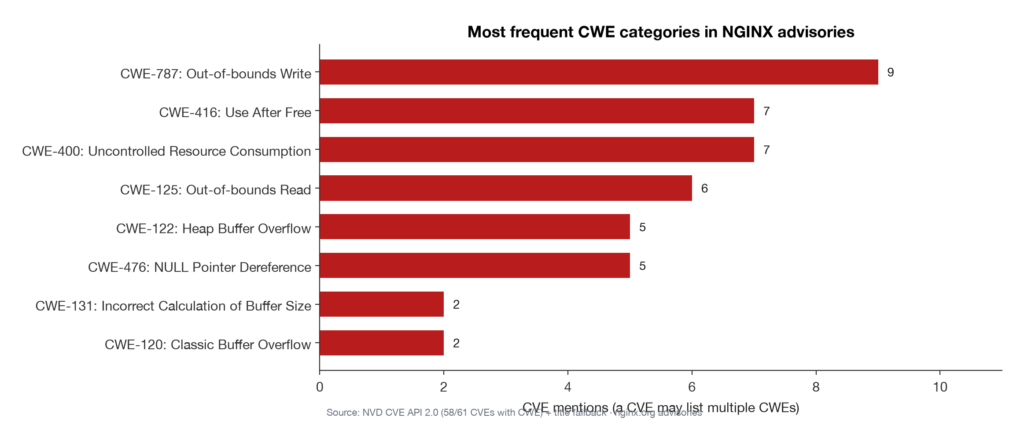 Figure 2. The most frequently mentioned CWE categories. One CVE may contain more than one CWE.
3. Protocol stacks and parsers are recurring hotspots
HTTP/3, HTTP/2/SPDY, SSL/TLS, and the MP4 module received the highest numbers of advisories. The resolver also appears repeatedly across the project’s history. These areas process complex or untrusted input, maintain state, or perform careful size calculations. That makes them valuable targets for focused testing and code review.
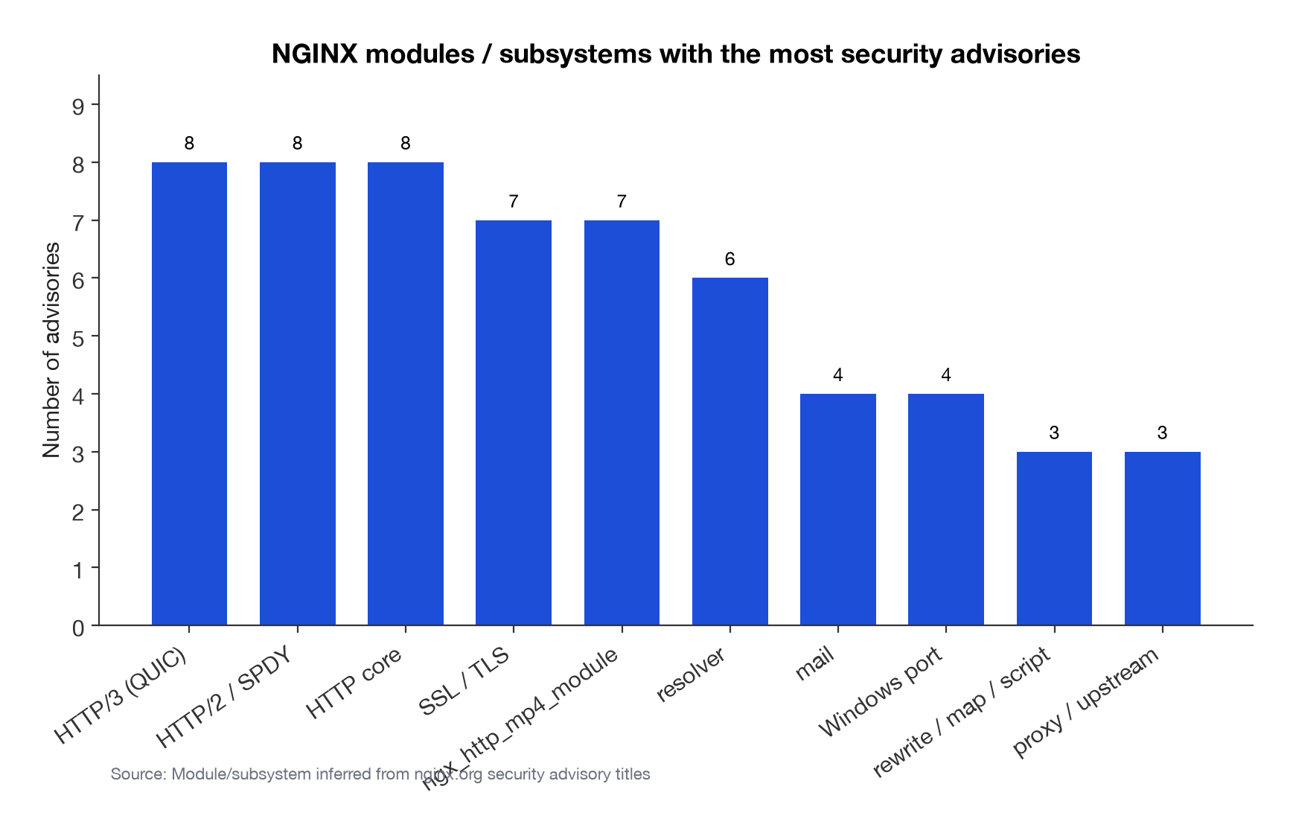
Figure 3. Modules and subsystems with the most advisories. Module labels were inferred from advisory titles and checked against changed files when available.
4. Most fixes are small
Thirteen of the 37 measured fixes changed only one to five lines. The median official patch changed six lines. Larger fixes usually involved broader hardening or complex modules such as MP4 and resolver code. Small patches are easier to review and backport, but their importance can be missed if teams pay attention only to large code changes.
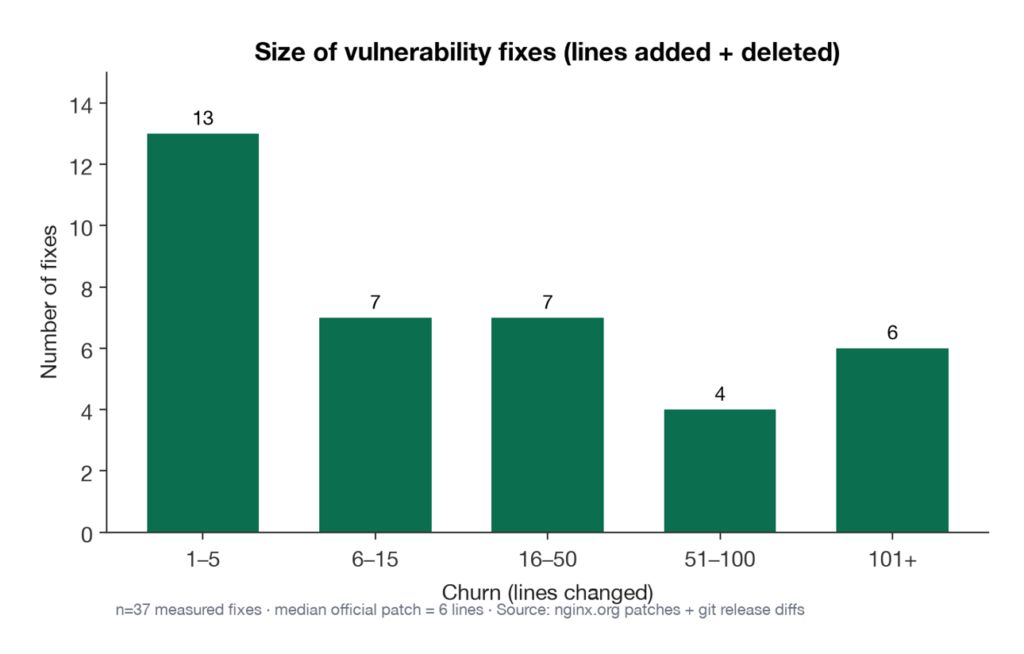
Figure 4. Distribution of measured fix sizes, using inserted plus deleted lines.
5. Public fixes were available quickly
Among 50 CVEs with comparable dates, 34 fixes appeared on the same calendar day as the NVD publication. For the other 16, NGINX released the fix before the NVD entry appeared. None of the measured fixes came after NVD publication. This supports a coordinated-disclosure pattern, but it does not reveal how long NGINX worked privately on each issue before disclosure.
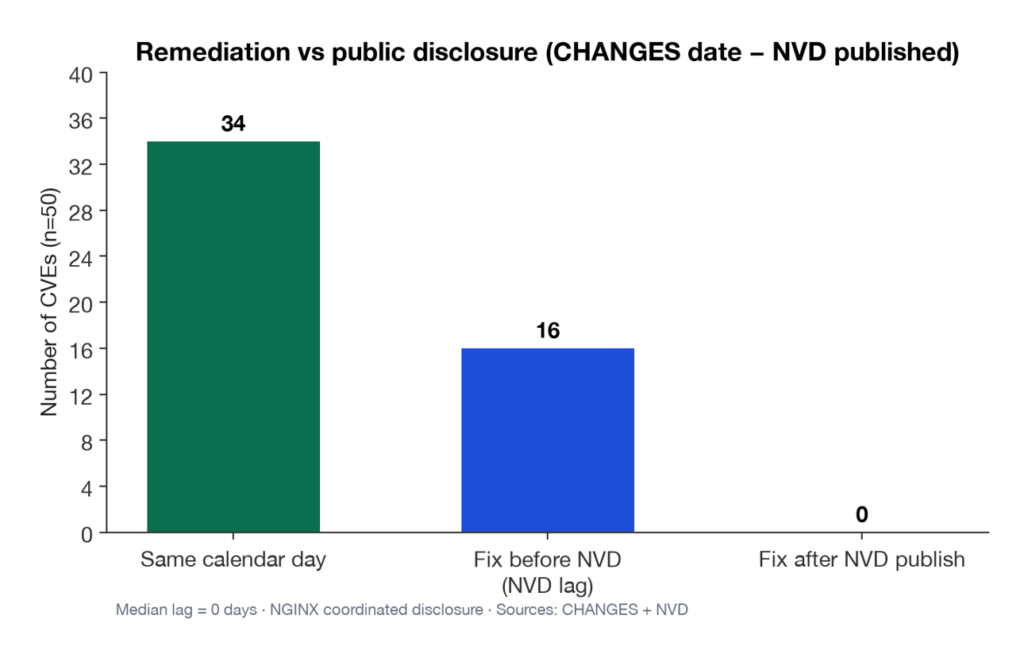
Figure 5. Timing of the NGINX fix or release compared with NVD publication.
6. Generic Semgrep rules missed the tested vulnerabilities
Stock Semgrep C rules found none of six representative vulnerabilities in the vulnerable versions. Custom heuristics produced matches, but almost all remained after the fixes, so they could not separate vulnerable code from fixed code. This small experiment is not a complete evaluation of Semgrep. It does show why pattern matching alone struggles with bugs involving object lifetime, protocol state, and relationships across functions.
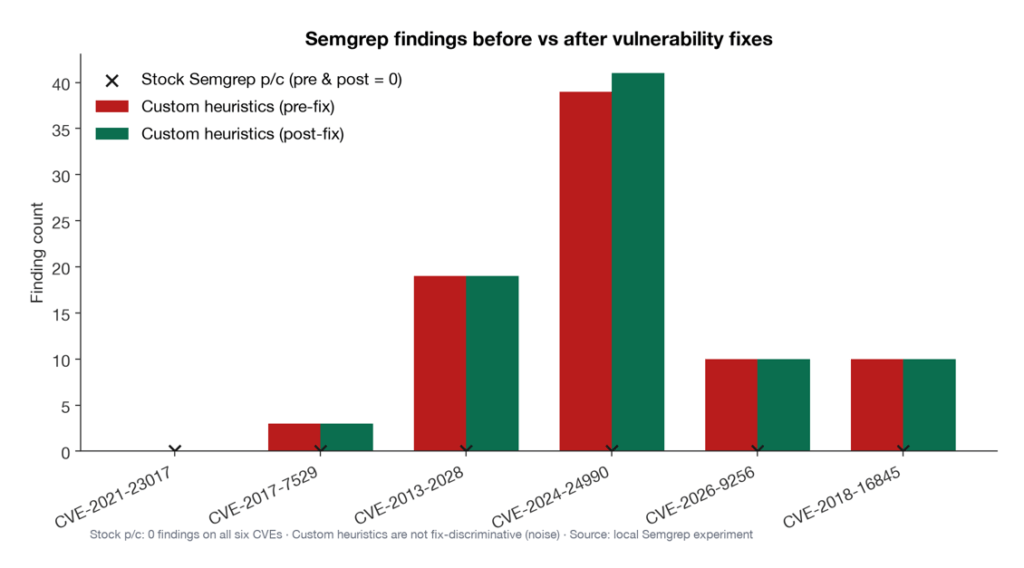
Figure 6. Semgrep findings before and after six fixes. Persistent findings indicate noise rather than successful detection.
Where LLMs can help
LLMs can make this work faster, especially when researchers must connect advisories, CVEs, release notes, source files, and patches. Useful tasks include summarizing a fix, proposing a likely CWE, identifying similar code, drafting a regression test, and creating a first version of a Semgrep or CodeQL rule.
Every result still needs testing. A useful detector should fire on the vulnerable version and stop firing after the fix. Fuzzing, sanitizers, path-sensitive analysis, and expert review remain necessary for evidence.
What teams should do
- Track NGINX advisories directly instead of waiting only for NVD or distribution updates.
- Prioritize HTTP/2, HTTP/3, MP4, resolver, and other input-parsing code during security reviews.
- Test security rules on both vulnerable and fixed versions to measure real detection, not raw alert counts.
- Use LLMs to prepare explanations, tests, and rule drafts, then verify them with tools and reviewers.
Final takeaway: NGINX shows strong public patch coordination and generally small fixes. Its security history also shows that memory bugs and complex protocol code remain difficult to detect with generic static rules. Better results will come from combining historical data, focused testing, stronger program analysis, and carefully validated LLM assistance.
Study scope
The study covers public data available up to August 2026. The 2026 count is incomplete. Module labels are partly inferred, patch sizes were measurable for 37 fixes, and the Semgrep sample contains six CVEs. Main sources: NGINX security advisories and CHANGES, the official NGINX Git repository, NVD CVE data, MITRE CWE, and Semgrep documentation.
References
- https://nginx.org/en/security_advisories.html
- https://nginx.org/en/CHANGES
- https://github.com/nginx/nginx
- https://nvd.nist.gov/developers/vulnerabilities
- https://cwe.mitre.org/
- https://semgrep.dev/docs/
Disclaimer: This is an independent analysis of public NGINX Open Source security information. It is not an official F5 or NGINX publication