
1–3 June 2026 — Tampere, Finland
Meet the Speakers
Researchers, engineers, and leaders from industry and academia sharing the frontiers of generative AI in software engineering.
Keynote Speakers

Alex Polyakov
CEO, ProjectSimple.ai
Keynote
When Software Stops Waiting: Life in Autonomous AI Systems
A 25+ year engineering leader and serial founder helping organizations move past fragmented tools with real-time visibility, structured execution, and AI-driven insight into delivery risk and outcomes.
Alex Polyakov is the founder and CEO of ProjectSimple.ai, a platform built to address the gap between tracking work and actually delivering software. A 25+ year engineering leader and serial founder, he helps organizations move past fragmented tools by bringing real-time visibility, structured execution, and AI-driven insight into delivery risk and outcomes. He hosts the “Let’s Talk Agile” podcast and writes about where Agile, AI, and modern software delivery collide.
About this talk
AI is changing far more than how code is written. Software systems are starting to observe, decide, and act with decreasing human involvement, forcing organizations to rethink how software engineering actually works. This keynote explores what’s already dead, what’s rapidly dying, and what’s emerging — from collapsing Agile processes to AI agents, self-healing systems, and continuously adapting software delivery.
About this talk
AI is changing far more than how code is written. Software systems are starting to observe, decide, and act with decreasing human involvement, forcing organizations to rethink how software engineering actually works. This keynote explores what’s already dead, what’s rapidly dying, and what’s emerging — from collapsing Agile processes to AI agents, self-healing systems, and continuously adapting software delivery.

Prof. Tommi Mikkonen
University of Jyväskylä
Keynote
From Vibes to Engineering
Professor of software engineering leading two research projects on GenAI native software development. Author of over 500 scientific publications and supervisor of over 500 theses.
Tommi Mikkonen is a professor of software engineering at University of Jyväskylä, Finland. Throughout his career, he has been prototyping new ways to design, develop, and deploy software while working at the cross-section of academic and industry settings. He has been leading two research projects on GenAI native software development, combining the best parts of AI-supported and classical software engineering. He has authored over 500 scientific publications and supervised over 500 theses.

Dr. Markus Borg
Principal Researcher, CodeScene — Adjunct Associate Professor, Lund University
Keynote
Agents Code. Teams Erode.
Dr. Markus Borg works at the confluence of software engineering and applied AI as Principal Researcher at CodeScene and Adjunct Associate Professor at Lund University. His research targets the maintainability of software- and data-intensive systems, focusing on code health and long-term sustainability. He serves on the editorial board of Empirical Software Engineering, is a department editor for IEEE Software, and is a faculty member of WASP.
About this talk
Coding agents now write significant portions of production software, and the interesting question is no longer whether they work — it is what happens to the humans around them. Velocity rises; memory thins. Provenance becomes opaque, expertise erodes through delegation, and maintainability quietly degrades behind a veneer of progress.
The talk argues that behavioral code analysis — reading code through its social signals rather than its syntax — is the discipline that keeps hybrid teams from hollowing out. Knowledge distribution, ownership, and coordination are the load-bearing structures that determine whether AI augments a team or replaces the wrong parts of it.
Drawing on a dual vantage at CodeScene and Lund University, the talk shares research highlights, candid reflections from the tool-vendor side of the table, and new case study results with partner loveholidays — a working picture of what hybrid development looks like when engineered deliberately.
Coding agents now write significant portions of production software, and the interesting question is no longer whether they work — it is what happens to the humans around them. Velocity rises; memory thins. Provenance becomes opaque, expertise erodes through delegation, and maintainability quietly degrades behind a veneer of progress.
The talk argues that behavioral code analysis — reading code through its social signals rather than its syntax — is the discipline that keeps hybrid teams from hollowing out. Knowledge distribution, ownership, and coordination are the load-bearing structures that determine whether AI augments a team or replaces the wrong parts of it.
Drawing on a dual vantage at CodeScene and Lund University, the talk shares research highlights, candid reflections from the tool-vendor side of the table, and new case study results with partner loveholidays — a working picture of what hybrid development looks like when engineered deliberately.
Industry Speakers


Tomas Herda & Agnes Lipovits
Post Business Solutions
Workshop
Agent-First Development: From Prompt-Driven to Spec-Driven Engineering
Hands-on workshop introducing Context Engineering, reusable Skills, AGENTS.md, MCP, and persistent AI knowledge bases for production-ready agentic workflows. Bring your laptop.
About this workshop session
Tomas Herda
Tomas Herda is Product Owner & Team Lead for Intelligent Document Processing at Post Business Solutions. He is Chairman of the Industrial Advisory Board of GPT-Lab (Tampere University), author of Prompting Blueprints, and VibeX 2026 Workshop Co-Chair at EASE 2026 Conference.
Agnes Lipovits
Agnes Lipovits is an AI Developer at Post Business Solutions, specializing in Intelligent Document Processing and AI-driven automation. Previously she worked at the University of Pannonia focusing on computer vision, machine learning, and medical image processing.
Tomas Herda
Tomas Herda is Product Owner & Team Lead for Intelligent Document Processing at Post Business Solutions. He is Chairman of the Industrial Advisory Board of GPT-Lab (Tampere University), author of Prompting Blueprints, and VibeX 2026 Workshop Co-Chair at EASE 2026 Conference.
Agnes Lipovits
Agnes Lipovits is an AI Developer at Post Business Solutions, specializing in Intelligent Document Processing and AI-driven automation. Previously she worked at the University of Pannonia focusing on computer vision, machine learning, and medical image processing.

Veli-Pekka “Wellu” Eloranta, PhD
Founder, Curious — Agentic Builder & Trainer
Talk
Vibes from Herding Agents: My Coworkers Are Bots Now
An unfiltered look at frontline agentic work — what happens when you let agent swarms loose on a paying client’s codebase. Hype-vs-reality, honest war stories, and what it means to move from code writers to agent orchestrators.
Veli-Pekka “Wellu” Eloranta, PhD, is the founder of Curious and works as agentic builder and trainer. He has been in the software industry since 2003 — as a developer, agile and AI coach and team lead — and has co-authored two books on software engineering: Designing Distributed Control Systems (Wiley, 2014) and A Scrum Book (Pragmatic Bookshelf, 2019). Today his focus is on agentic software development and helping organisations make the shift toward AI-driven ways of working.

Sami Lahti
Co-founder & CTO, Koivu Solutions Oy
Software developer since the mid-1980s and international software team lead since the 1990s. His focus is on generative AI and agentic development: using AI skills and frameworks to ship production-quality applications faster, moving feature delivery closer to customer-facing teams.
Sami Lahti is co-founder and CTO of Koivu Solutions Oy. Today his focus is on generative AI — especially agentic approaches that can reliably produce production-quality software. His GAISE26 talk covers how to use agentic skills to build new applications with production-grade code, and what frameworks and practices are designed for AI-native development. A key theme is organizational change: shifting feature development from traditional developers to customer-facing experts through well-designed AI workflows, while developers evolve into quality control and platform enablement roles.

Mika Torhola
Head of New Business & Chairman of the Board, Atostek Oy
Talk
Source Code is Dead — Long Live the Spec
Mika Torhola is Head of New Business and Chairman of the Board at Atostek Oy, focusing on spec-driven agentic software development in regulated and safety-critical domains where Atostek has decades of track record (IEC 62304, ISO 13485, ISO 14971).
About this talk
AI coding tools generate code at impressive speed — but regulators, auditors, and on-call engineers don’t ask for code: they ask for evidence, traceability, and intent. In regulated domains, “vibe coding” with raw LLMs is a liability, not an asset.
The talk argues for a shift in perspective: the source code is no longer the source of truth — the specification is. Code becomes a disposable, regenerable artifact; the spec, the risk model, and the traceability graph are what teams actually need to maintain. The session includes a live demo illustrating that spec-driven agentic development is shipping production-grade software today.
AI coding tools generate code at impressive speed — but regulators, auditors, and on-call engineers don’t ask for code: they ask for evidence, traceability, and intent. In regulated domains, “vibe coding” with raw LLMs is a liability, not an asset.
The talk argues for a shift in perspective: the source code is no longer the source of truth — the specification is. Code becomes a disposable, regenerable artifact; the spec, the risk model, and the traceability graph are what teams actually need to maintain. The session includes a live demo illustrating that spec-driven agentic development is shipping production-grade software today.

Juha Viitanen
Exertus
Engineering manager with over 20 years of experience at the intersection of embedded Linux, machine control systems, AI-enabled systems, and hardware–software co-design. Focused on building practical, scalable solutions across the full stack.

Janne Kuivalainen
CTO & Head of Technology, Danfoss Drives Business
Talk
Measuring the Business Value of Agentic AI
Agentic AI promises step-change productivity, yet its economic value remains difficult to evidence. This talk introduces a conceptual framework linking agent maturity over time with structured business impact assessment through KPI trees, and outlines how value creation, measurement, and governance must coevolve.

Tapio Pitkäranta
Siili Solutions
20+ years building AI — from agent research and high-tech entrepreneurship to hands-on GenAI leadership. At Siili Solutions he helps clients in retail, healthcare, taxation, energy and HR turn AI into shipped products. PhD in Software Agents & Generative AI, Aalto University (expected 2026).

Dr. Markus Koskela
Development Manager, LUMI AI Factory — CSC
Development manager at the LUMI AI Factory, responsible for AI expert support and training. Earlier he was a senior AI specialist at CSC focusing on deep learning, GPU computing, and HPC. He holds a PhD in computer science and has previously worked as a senior researcher at University of Helsinki, Aalto University, and Dublin City University.
Workshops


Prof. Xiaofeng Wang, Daniel Planötscher & Silvia Cortesia
LUT University / Free University of Bozen-Bolzano (unibz & unitn)
Workshop
Vibing Ideas: Knowing What to Build When AI Does the Rest
“If coding really is solved, the bottleneck moves to taste, judgment, and knowing what is worth building.” A hands-on workshop using AI as a thinking partner for navigating ambiguity, surfacing user needs, and shaping ideas into solutions worth building.
About this workshop session
Prof. Xiaofeng Wang
Xiaofeng Wang is one of the founding architects of software startup research as a discipline. She is Professor of Software Engineering at LUT University and founder of the Software Startup Research Network. Before LUT, she spent over a decade at the Free University of Bozen-Bolzano. Her work cuts across agile and lean development, software innovation, and the human and social fabric that decides whether teams build things people want.
Daniel Planötscher
Daniel Planötscher is a PhD researcher at unibz. His research explores AI’s impact on upstream software engineering activities, Human–AI collaboration, and AI-native software development. He also works in a major IT company engaged in its AI transformation journey.
Silvia Cortesia
Silvia Cortesia is a PhD researcher at unibz and unitn working on entrepreneurship and venture capital in the age of generative AI. Her research investigates how AI reshapes early-stage venture dynamics and VC decision-making. She also designs AI-driven automation systems for SMEs in industry.
Prof. Xiaofeng Wang
Xiaofeng Wang is one of the founding architects of software startup research as a discipline. She is Professor of Software Engineering at LUT University and founder of the Software Startup Research Network. Before LUT, she spent over a decade at the Free University of Bozen-Bolzano. Her work cuts across agile and lean development, software innovation, and the human and social fabric that decides whether teams build things people want.
Daniel Planötscher
Daniel Planötscher is a PhD researcher at unibz. His research explores AI’s impact on upstream software engineering activities, Human–AI collaboration, and AI-native software development. He also works in a major IT company engaged in its AI transformation journey.
Silvia Cortesia
Silvia Cortesia is a PhD researcher at unibz and unitn working on entrepreneurship and venture capital in the age of generative AI. Her research investigates how AI reshapes early-stage venture dynamics and VC decision-making. She also designs AI-driven automation systems for SMEs in industry.


François Christophe & Konsta Kalliokoski
University of Jyväskylä
Workshop
Agentic Workflows: Representation, Artifacts, and Cognitive Load
A hands-on workshop addressing the representation of agentic workflows and the artifacts produced by agents. Artifacts will be evaluated interactively by the audience, covering different ways to organize workflows, provide context to agents, and ease cognitive load when evaluating agent-produced artifacts.
About this workshop session
François Christophe
François Christophe works as a researcher at the University of Jyväskylä. Passionate about cognitive systems, he is arguably one of the first in Finland to apply Natural Language Processing techniques to the early stages of Systems Engineering since 2009. He defended his PhD thesis in 2012 on analyzing large natural language documents and automatically extracting requirements for system specification. He has worked across a wide range of AI positions, from integrating biological neuron cells into computation at University of Tampere to leading the Robotics research group at Hämeen University of Applied Sciences.
Konsta Kalliokoski
Konsta Kalliokoski is a Project Researcher at the University of Jyväskylä, where his work focuses on agentic systems across the software development lifecycle and enterprise architecture, with emphasis on multi-agent systems and approaches to modeling them. He brings an industry perspective from his prior career as a software architect in the mining sector.
François Christophe
François Christophe works as a researcher at the University of Jyväskylä. Passionate about cognitive systems, he is arguably one of the first in Finland to apply Natural Language Processing techniques to the early stages of Systems Engineering since 2009. He defended his PhD thesis in 2012 on analyzing large natural language documents and automatically extracting requirements for system specification. He has worked across a wide range of AI positions, from integrating biological neuron cells into computation at University of Tampere to leading the Robotics research group at Hämeen University of Applied Sciences.
Konsta Kalliokoski
Konsta Kalliokoski is a Project Researcher at the University of Jyväskylä, where his work focuses on agentic systems across the software development lifecycle and enterprise architecture, with emphasis on multi-agent systems and approaches to modeling them. He brings an industry perspective from his prior career as a software architect in the mining sector.
Academic Speakers

Juha Savolainen
Part-time Professor of Practice, University of Jyväskylä
Has held several management positions at Danfoss, including head of R&D for Digital Services and head of global software for Danfoss Drives. Also worked for Roche Diagnostics and Nokia Research. Over 70 peer-reviewed publications.
Juha Savolainen is a part-time professor of practice at the University of Jyväskylä. He has held several management positions at Danfoss, including head of R&D for the Digital Services Business unit and head of global software for Danfoss Drives. In addition, he has worked for Roche Diagnostics and Nokia Research. He holds a Doctor of Science degree in software engineering from Aalto University. He has written over 70 peer-reviewed publications.

Dr. Mika Saari
Tampere University / GPT-Lab
Researcher and educator at Tampere University, Vice Head of the GPT-Lab research group. Focuses on sustainable software engineering and generative AI in domain-specific contexts. Project leader in the BioAI project.
Mika Saari is a researcher and educator at Tampere University, Vice Head of the GPT-Lab research group. His work focuses on sustainable software engineering practices. He currently leads the BioAI project and has previously led the Agrihub project, exploring generative AI in domain-specific contexts. His broader research interests include IoT and AI-assisted software engineering.

Dr. Jussi Rasku
Tampere University / GPT-Lab
Postdoctoral researcher and Vice Head of the GPT-Lab research group. Works at the intersection of AI, software engineering, and operations research. Bridges research and engineering with measurable impact.
Jussi Rasku is a postdoctoral researcher at Tampere University and Vice Head of the GPT-Lab research group. With a background in machine learning, optimization, and real-world systems such as vehicle routing and resource planning, his work centers on how organizations adopt AI and LLM-based systems in operational settings and how human–AI collaboration reshapes software engineering.

Dr. Muhammad Waseem
Postdoctoral Researcher & Vice-Head of GPT-Lab, Tampere University
Author, researcher, educator, and practice-oriented technology developer at the intersection of software engineering, generative AI, software architecture, and industrial AI adoption. Author and co-author of over 80 research papers in leading software engineering journals and conferences.
Dr. Muhammad Waseem is a postdoctoral researcher and Vice-Head of GPT-Lab at Tampere University. His work focuses on transforming research ideas into hands-on prototypes, AI-assisted tools, and experimental platforms for real-world software engineering and business contexts.

Dr. Kai-Kristian Kemell
Head of GPT-Lab, Tampere University
Postdoctoral research fellow at Tampere University. His research focuses on software engineering processes, practices, and methods, as well as organizational and business aspects of IT. He has 60+ peer-reviewed scientific publications and is the recipient of multiple best paper awards.
Kai-Kristian Kemell is Head of GPT-Lab and a postdoctoral research fellow at Tampere University, Faculty of Information Technology and Communication Sciences. His research focuses on software engineering processes, practices, and methods, and other organizational and business aspects of IT, such as software business. He has 60+ peer-reviewed scientific publications and is the recipient of multiple best paper awards.
Executive Track

Meeri Haataja
Founder & CEO, Saidot Ltd
Executive Track
Founder and CEO of Saidot Ltd, a Finnish startup providing technology and services for responsible AI. Saidot’s SaaS platform for AI governance and transparency is used by large public and private organizations for systematic AI management. Chair of the IEEE AI Impact Use Cases Initiative and Harvard Berkman Klein Center affiliate since 2019.

Karoliina Kettukari
AI Director, OP Pohjola
Executive Track
Technology and transformation leader driving OP Pohjola’s AI strategy and enterprise-wide AI transformation. She leads the company’s executive AI coach network and chairs the AI Alignment Forum. With over a decade of experience in modern work and organisational transformation, she is a multi-awarded international speaker and thought-leader on AI implementation and the future of work.

Timo Savolainen
Founder & CEO, 4. Aalto
Executive Track
Timo Savolainen is the Founder & CEO of 4. Aalto, an AI-native consulting company helping leaders and organizations accelerate AI transformation from strategy to practice. He is an AI strategist, 3x author, and advisor focused on building AI-native businesses and societies.

Henna Hurttala
Head of Research & Development, Työtehoseura
Executive Track
Unit Director at TTS Work Efficiency Institute, a Finnish research, training, and development organization focused on improving productivity, work practices, and competencies across industries. Her work centers on translating research and innovation into practical improvements in work processes, leadership, and skills development.

Prof. Jari Stenvall
Tampere University
Executive Track
Professor of Administrative Science at Tampere University. Has studied AI for 10 years and digital solutions in organizations for 25 years. Named Professor of the Year in Finland in 2022. His research connects administrative science with the practical challenges of digital transformation and AI adoption in organizations.

Prof. Atte Oksanen
Vice Dean for Research, Tampere University
Executive Track
Talk
AI & the Redesign of Work — WorkAI Project Results
Professor of Social Psychology and Vice Dean for Research, Tampere University. Director of the Emerging Technologies Lab. Over 400 publications including 220+ peer-reviewed articles in leading international journals.
Atte Oksanen is Professor of Social Psychology and Vice Dean for Research at the Faculty of Social Sciences, Tampere University. His research focuses on digital technologies, social interaction, crime, and addiction. He is Director of the Emerging Technologies Lab and has published over 400 publications, including more than 220 peer-reviewed international journal articles. His books include Online Hate and Harmful Content (Routledge, 2017) and AI Disruption at Work (Palgrave Macmillan, forthcoming).

Sanni Pöntinen
Doctoral Student, Administrative Sciences, University of Tampere
Executive Track
Sanni Pöntinen has over twenty years of experience in development work, planning and supporting municipal policy initiatives and serving as a strategic development consultant. She is a doctoral student in administrative sciences at the University of Tampere. Her dissertation examines altruism, leadership, and agent-based problem-solving.
GPT-Lab Researchers

Prof. Pekka Abrahamsson
Professor of Software Engineering & Founder of GPT-Lab, Tampere University
Details coming soon

Salla Westerstrand
CEO, Harmless Consulting — Technology Ethicist
Talk
Engineering Trustworthy AI in Europe: Compliance & Responsibility
Technology ethicist helping people, organisations and societies thrive in times of digital disruption. She holds a PhD in Information Systems, is CEO of Harmless Consulting, vice-president of Sustinaires ry, and a recent addition to GPT-Lab focusing on AI ethics and governance.
Salla Westerstrand is a technology ethicist who helps people, organisations and societies thrive in times of digital disruption. In her research, she studies ethical and societal impacts of AI and how to govern them. As a practitioner, she advises organisations on ethical AI innovation, focusing on high-risk sector use cases. She holds a PhD in Information Systems and has a multidisciplinary background in social science and language studies. She is CEO of Harmless Consulting, vice-president of Sustinaires ry, and has served as an advisor for several AI transformation projects across Europe.

Navneet Arora
Project Researcher, GPT-Lab, Tampere University
Talk
Preserving Organisational Memory in the Era of AI Agents
Navneet Arora focuses on the kind of knowledge organisations usually fail to capture — tacit knowledge. As a Project Researcher at GPT-Lab, he explores how rare human know-how and expertise can be collected, structured, and operationalised at scale. He is also a software engineer with experience at PwC and Capgemini across industries including telecom, auditing, KYC platforms, and HR systems.

AA
Toufique Hasan & Ayman Ahad Khan
Doctoral Researchers, GPT-Lab, Tampere University
Workshop
Agentic RAG: AI that Decides — Retrieval to Autonomy
Toufique Hasan is a Doctoral Researcher at GPT-Lab working on Retrieval-Augmented Generation, Agentic RAG, and AI agents, with an emphasis on designing practical AI systems that support real-world decision-making.
About this workshop session
Ayman Ahad Khan
Ayman Ahad Khan is a researcher and developer at the intersection of Agentic Workflows, Multi-Agent Systems, and Software Engineering at GPT-Lab, Tampere University. He works on pushing adaptive, explainable, and human-centered AI engineering forward.
Tools to install before the workshop
Please have all three installed and working before you arrive:
1. Ollama (local LLM runtime)
macOS/Windows: ollama.com/download
macOS (Homebrew):
Linux:
Verify:
2. Python 3.11 (backend)
macOS:
Windows/Linux: python.org/downloads (Windows: tick “Add Python to PATH”)
Verify:
3. Node.js 18+ (web UI)
macOS:
Windows/Linux: nodejs.org (LTS version)
Verify:
Ayman Ahad Khan
Ayman Ahad Khan is a researcher and developer at the intersection of Agentic Workflows, Multi-Agent Systems, and Software Engineering at GPT-Lab, Tampere University. He works on pushing adaptive, explainable, and human-centered AI engineering forward.
Tools to install before the workshop
Please have all three installed and working before you arrive:
1. Ollama (local LLM runtime)
macOS/Windows: ollama.com/download
macOS (Homebrew):
brew install ollama then ollama serveLinux:
curl -fsSL https://ollama.com/install.sh | sh then ollama serveVerify:
ollama --version2. Python 3.11 (backend)
macOS:
brew install [email protected] or python.org/downloadsWindows/Linux: python.org/downloads (Windows: tick “Add Python to PATH”)
Verify:
python3.11 --version3. Node.js 18+ (web UI)
macOS:
brew install node or nodejs.org (LTS)Windows/Linux: nodejs.org (LTS version)
Verify:
node --version (must be v18 or higher)
Md Mahade Hasan
Doctoral Researcher, Tampere University
Workshop
Small Language Models for Software Engineering: When Smaller is Smarter
Doctoral researcher at Tampere University under the supervision of Prof. Pekka Abrahamsson. His research focuses on Small Language Models (SLMs) for software engineering tasks, fine-tuning SLMs, and multi-agent systems. He is currently running controlled experiments comparing SLMs against frontier models in agentic pipelines for Infrastructure-as-Code automation.


Malik Abdul Sami & Zeeshan Rasheed
Doctoral Researchers, GPT-Lab, Tampere University
Talk
From Task to Action: Why Agent Harnesses Matter
Malik Abdul Sami investigates how multi-agent AI systems reshape software engineering activities, with a focus on Human–AI collaboration and AI-native software development. He brings over 12 years of industry experience. Zeeshan Rasheed is a final-year doctoral researcher whose research focuses on Agentic AI for software engineering tasks in real-world industrial scenarios, with over 6 years of experience across industry and academia.
Zeeshan Rasheed
Zeeshan Rasheed is a final-year doctoral researcher at Tampere University, based in the GPT Lab. His research focuses on Agentic AI, where he explores the use of AI agents for software engineering tasks, with a particular focus on understanding the role of agents in real-world industrial scenarios. He brings over 6 years of experience working across both industry and academia in the field of AI. He completed his Master’s degree in China in 2021.
Zeeshan Rasheed is a final-year doctoral researcher at Tampere University, based in the GPT Lab. His research focuses on Agentic AI, where he explores the use of AI agents for software engineering tasks, with a particular focus on understanding the role of agents in real-world industrial scenarios. He brings over 6 years of experience working across both industry and academia in the field of AI. He completed his Master’s degree in China in 2021.


Md Nasir Uddin Shuvo & Md Aidul Islam
Researchers, GPT-Lab, Tampere University
Workshop
From Prompt Pipelines to Agentic Systems
Md Nasir Uddin Shuvo is a Researcher at GPT-Lab with a background in full-stack development and AI-driven software engineering. He works on practical AI systems involving agentic workflows, intelligent automation, and scalable AI applications. His current focus includes memory-aware AI assistants, orchestration systems, and real-world AI software architectures.
Md Aidul Islam
Md Aidul Islam is a Researcher at GPT Lab, Tampere University, Finland, with a background in full stack and mobile application development and AI-driven software engineering. He is interested in applying AI to solve real-world problems which can be solved by software solutions. His current research focus is agentic AI memory management and multi-agent systems.
Md Aidul Islam is a Researcher at GPT Lab, Tampere University, Finland, with a background in full stack and mobile application development and AI-driven software engineering. He is interested in applying AI to solve real-world problems which can be solved by software solutions. His current research focus is agentic AI memory management and multi-agent systems.

Kalle Kulonen
Doctoral Researcher, GPT-Lab, Tampere University
Talk
World Models for Software Agents
Doctoral researcher at GPT-Lab bringing over a decade of industry experience in cloud-native SaaS engineering into AI research. His research explores how software engineering agents could use world models to build more reliable applications for real-world interaction and decision-making.

Chalisa Veesommai Sillberg
Postdoctoral Researcher, GPT-Lab, Tampere University
Her research focuses on the EU AI Act and its practical implementation, particularly in supporting SMEs in developing safe and compliant AI systems. Her work includes the strategy book Navigating Compliance: Strategic Guidance for SMEs under the EU AI Act and the TESSA tool, both developed within the GENT project. She also contributes to information and data analysis across environmental research domains.
Chalisa Veesommai Sillberg is a Postdoctoral Researcher at Tampere University’s GPT-Lab and contributor to research initiatives such as the Generative Artificial Intelligence in Business Support (GENT) project. Her research focuses on the EU AI Act and its practical implementation, particularly in supporting small and medium-sized enterprises (SMEs) in developing safe and compliant AI systems. Her work includes the strategy book Navigating Compliance: Strategic Guidance for SMEs under the EU AI Act and the TESSA tool, both developed within the GENT project. In addition to her work on AI governance, she contributes to information and data analysis across a range of environmental research domains.

Jiri Härmä
Doctoral Researcher, GPT-Lab, Tampere University — Sales Manager, Tieto
Over ten years of industry experience across manufacturing, consulting, and sales. He has worked in ICT sales and project management and has built expertise in analytics, machine learning, and applied AI. His dissertation examines sovereign generative AI especially from a business and organisational perspective.
Jiri Härmä has over ten years of industry experience across manufacturing, consulting, and sales. He has worked in ICT sales and project management, and has built expertise in analytics, machine learning, and applied artificial intelligence. He works as a doctoral researcher at Tampere University with the GPT-Lab research group and as a Sales Manager at Tieto. During his doctoral studies, he has contributed to research projects such as MAISA and FAIR 2.0. His dissertation examines sovereign generative AI especially from a business and organisational point of view.
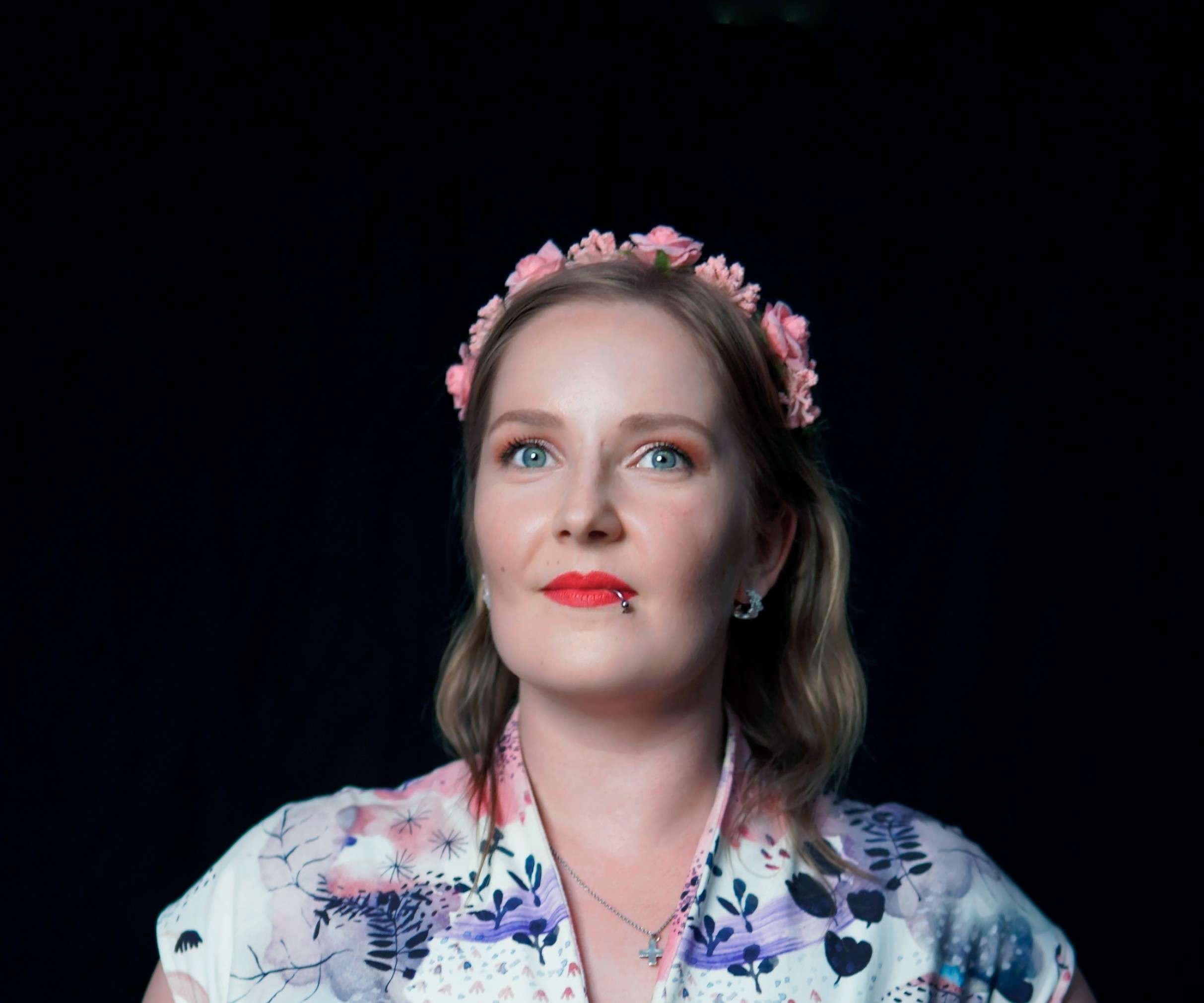

Tiina Karhukivi & Mika Suominen
Project Researcher & Research Assistant, GPT-Lab, Tampere University
Talk
Stop Comparing Language Models. Start Building the Agentic OS
A live industry showcase where they build an everyday AI “Chief of Staff” assistant on stage, demonstrating how a structured layer of identity, context, and memory transforms a generic AI tool into a reliable, organization-aware system.
About this talk
Tiina Karhukivi
Tiina Karhukivi is a Project Researcher at GPT-Lab, Tampere University. Her work sits at the intersection of Generative AI, large language models, and software engineering. Since 2017 she has worked as a Software Engineer, Scrum Master, and Agile Coach in both consulting and product companies. A Certified Scrum Master with a wide technical background spanning C++, C#, Python and modern software development practices, she is particularly interested in how AI-powered tools are reshaping the way software teams work and deliver value.
Mika Suominen
Mika Suominen is an ICT Engineering student and Research Assistant at GPT-Lab, Tampere University. Working within the GENT project, his role involves bringing practical Generative AI solutions and workflow automation concepts to organizations. Combining a solid background in commercial management with modern technology studies, he focuses on making new AI developments accessible and useful for business environments.
Tiina Karhukivi
Tiina Karhukivi is a Project Researcher at GPT-Lab, Tampere University. Her work sits at the intersection of Generative AI, large language models, and software engineering. Since 2017 she has worked as a Software Engineer, Scrum Master, and Agile Coach in both consulting and product companies. A Certified Scrum Master with a wide technical background spanning C++, C#, Python and modern software development practices, she is particularly interested in how AI-powered tools are reshaping the way software teams work and deliver value.
Mika Suominen
Mika Suominen is an ICT Engineering student and Research Assistant at GPT-Lab, Tampere University. Working within the GENT project, his role involves bringing practical Generative AI solutions and workflow automation concepts to organizations. Combining a solid background in commercial management with modern technology studies, he focuses on making new AI developments accessible and useful for business environments.